01What is Bitcoin?
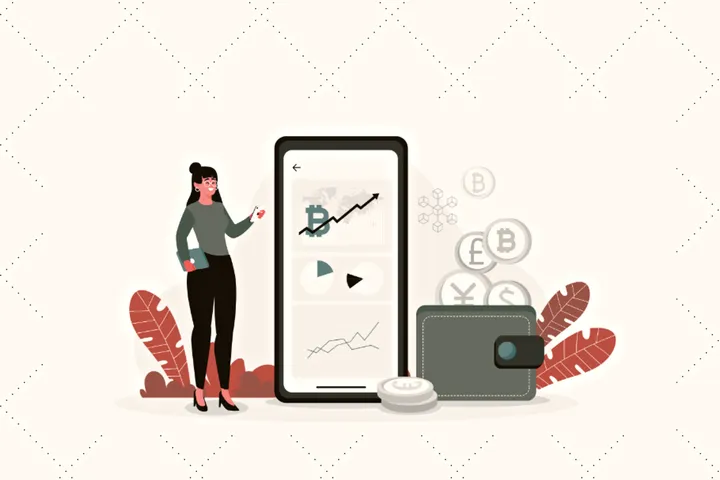
Bitcoin is money that lives on the internet and is not issued by any bank or state. It was described in 2008 in a short paper by someone using the name Satoshi Nakamoto, and the network went live in January 2009. The goal was to let two people send value to each other online without a middleman keeping the books.
Instead of a bank, thousands of independent computers keep the ledger, and they all follow the same rules written into open-source code. One of those rules caps the supply at 21 million coins. Each bitcoin divides into 100 million satoshis, so nobody needs to buy a whole coin: holding 0.0005 BTC is perfectly normal.
“Crypto”, “cryptocurrency” and the Albanian kriptovaluta or kriptomonedha all describe the same family: digital currencies that run on a blockchain. Bitcoin came first and remains the best known. Thousands of others, usually called altcoins, followed. Most see little real use, and some were launched purely to take money from late buyers.
02How a blockchain works, without the maths
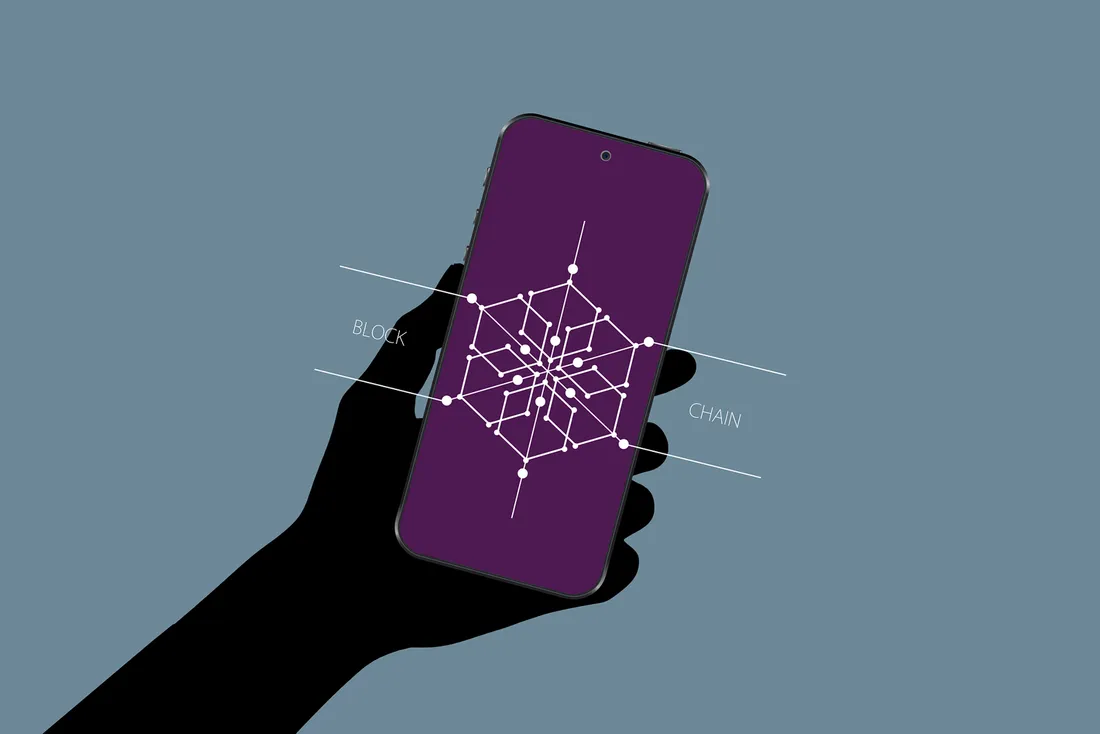
Picture an accounts ledger that everyone holds an identical copy of. Each page is a block containing a batch of transactions. When a page is full it is sealed with a fingerprint (a hash) calculated from its contents and from the previous page’s fingerprint. The pages are linked like a chain, which is where the name comes from.
Change one old entry and that page’s fingerprint changes, which breaks every page after it. All the other copies would spot the mismatch at once and reject the forgery. That is why Bitcoin’s history is, in practice, impossible to rewrite.
New pages are added by miners: specialised machines competing to solve a computational puzzle. The winner adds the block and collects newly created bitcoin plus the transaction fees. This system, called Proof of Work, uses a lot of electricity. Albanian police have repeatedly seized mining rigs running on stolen power, including roughly 631 machines in Shijak in January 2022. The legal side is covered in our crypto mining in Albania guide.
03Anatomy of a Bitcoin transaction
Take a simple case. Arta in Tirana wants to send 0.001 BTC to her brother in Milan. In her wallet app she pastes his address, a long string of letters and numbers, types the amount and taps confirm. The app signs the instruction with Arta’s private key, a mathematical proof that the coins are hers to spend.
The signed transaction is broadcast to the network and waits to be included in the next block. Bitcoin adds a block roughly every ten minutes on average. After one confirmation the payment is effectively done, though exchanges usually wait for several before crediting a deposit. The fee depends on how busy the network is, not on the amount you send.
Two things to learn on day one. First, transactions are final: there is no chargeback like on a card, and nobody can reverse a payment sent to the wrong place. Second, every coin travels on a specific network. Sending USDT on TRC-20 to an address that only expects ERC-20 can mean losing it. Check the network every time, and send a small test amount first.
04Ethereum, stablecoins and USDT
Ethereum is the second-largest blockchain. Its coin is ether (ETH), but the bigger idea is the smart contract: a program that runs by itself when its conditions are met. Decentralised exchanges, lending apps, NFTs and most stablecoins are built on top of it. Every action on Ethereum costs a fee known as gas.
Stablecoins are crypto tokens built to hold a steady value, usually one US dollar. The most widely used is USDT, issued by Tether, which circulates on several networks at once, including Ethereum (ERC-20) and Tron (TRC-20). Albanians often use it as a stepping stone: buy USDT, swap it for bitcoin later, or sell it on a P2P market. Our USDT in Albania page explains the networks and the real rate against the lek.
Stable does not mean safe. A stablecoin is not a bank deposit and carries no deposit insurance; its value rests on the issuer’s reserves. According to the government’s May 2026 impact assessment, stablecoins are not yet covered by Albania’s legal framework at all. The MiCA-style draft law would hand their supervision to the Bank of Albania.
| Bitcoin | Ethereum | USDT | |
|---|---|---|---|
| Main use | Store of value, payments | Smart contracts, apps | Digital dollar |
| Supply | Capped at 21 million | No fixed cap | Issued on demand |
| Price | Highly volatile | Highly volatile | Around 1 USD |
| Who controls it | Nobody — the network | Nobody — the network | Tether, a private company |
05Exchange or wallet?
An exchange is the platform where you buy and sell crypto for euros, dollars or other coins. You open an account, verify your identity with an ID card or passport (the KYC check) and pay by card or bank transfer. Your coins then sit in your account on the platform, much like money in a bank, except that nobody guarantees them.
A wallet is the app or device that holds your keys. With a self-custody wallet such as Trust Wallet or MetaMask, or a hardware device like a Ledger or Trezor, only you control the coins. That protects you if an exchange goes bust or freezes withdrawals, but it also makes every mistake yours alone.
Exchange
- Buy with card or SEPA
- The platform holds the keys
- Forgot password? Recover with KYC
- Risk: insolvency, hacks, freezes
Self-custody wallet
- Receive coins from an exchange
- You hold the keys
- Lost seed phrase? Coins are gone
- Risk: your own error, or a scammer
Most people start on an exchange and move to a wallet as the amount grows. The platforms that accept Albanian residents are compared in the best crypto exchanges; choosing a wallet is covered in crypto wallets.
06Keys and the seed phrase
Every wallet has a private key, a very large number that authorises spending. From it come the public key and your address, which you can share freely, like an IBAN. Whoever has the private key has the coins. There is no branch to complain to.
So you never have to copy out huge numbers, wallets give you a seed phrase of 12 or 24 English words. It is the master backup of all your keys and can rebuild the wallet on any phone. Write it on paper, keep it somewhere safe and private, and never photograph it, email it or save it to the cloud.
07Volatility and the real risks
Bitcoin can move 10% in a day and has fallen more than 70% from a peak several times in its history. Small altcoins swing harder still, and many never come back. There is no guaranteed return, and anyone promising one is selling something.
Price is only one of the risks. Exchanges can be hacked or collapse; you can paste the wrong address or pick the wrong network; scammers target people precisely when they are new. The Bank of Albania warned in July 2017 about volatility, unregulated platforms, cyber risk and the absence of deposit insurance, and that warning still holds.
Leveraged products such as futures and margin trading multiply the danger for a beginner: a small price move can wipe out the whole stake within minutes. They are not a place to start, and nothing on this page is advice about what or when to buy.
08The Albanian context: lek, euro, AMF and tax
Lek and euro. International platforms work mainly in euros and dollars, not lek. Pay with a lek card and your bank converts the money and keeps its margin. Albania has been part of SEPA since October 2025, so a euro transfer from an Albanian bank to an exchange is cheaper than it used to be, although not every platform accepts SEPA from Albanian residents. The practical routes are compared in the quickest ways to buy.
Licensing. Law No. 66/2020 on financial markets based on distributed ledger technology has been in force since 1 September 2020 and provides for licences from the AMF (Albanian Financial Supervisory Authority) together with AKSHI. Yet the government’s impact assessment of 13 May 2026 is blunt: zero applications, zero licensed entities. Every exchange you use from Albania serves you cross-border, without local investor protection. MiCA licences held by EU subsidiaries cover EEA residents, not Albania. The full picture is in is crypto legal in Albania.
Tax. Since 1 January 2024, under Law 29/2023, individuals’ gains from crypto transactions are taxed at 15% unless they count as business income. You declare them yourself by 31 March of the following year, so log every buy and sell with the date, amount and price. Details are on our crypto tax in Albania page.
ATMs. As of October 2026 we found no verified Bitcoin ATM anywhere in Albania. If someone offers you a “crypto ATM” in a shop, be careful; the status and nearest machines abroad are on Bitcoin ATM Albania.
09First steps with a small amount
If you decide to try, this is the simplest route for a beginner in Albania. It is not a recommendation to buy any particular coin; it is a way to learn the process while keeping the stakes low.
- Set a budgetA fixed sum you could lose completely, for example €20–50. Never borrow to buy crypto.
- Pick a platform that accepts Albanian residentsCheck its excluded-countries list, its fees and its payment methods.
- Lock the account downA unique password and two-factor authentication with an app, not only SMS.
- Verify your identity (KYC)ID card or passport plus a selfie. It usually takes a few minutes.
- Make the first purchaseCard is fastest, SEPA is usually cheaper. Look at the total cost, not only the headline fee.
- Try a small transferInstall a wallet, write the seed phrase on paper and send a test amount before anything larger.
- Keep recordsDate, amount, price and fee for every transaction: you will need them for your tax return.
Paying with an Albanian bank card, including 3-D Secure and the reasons cards get declined, is covered in buy crypto with a card. To see what one bitcoin is worth in lek today, use the bitcoin to lek converter.
10The most common beginner mistakes
Following “signals” on Telegram or TikTok. Groups promising sure profits live off new members. The AMF has publicly named platforms such as TXEX, XUEXA and GROKREXDUU that sold fake crypto buy signals.
Trusting a phone call. In April 2026 Albanian and Austrian authorities, supported by Europol and Eurojust, shut down Tirana call centres linked to more than €50 million in investment fraud. No serious platform cold-calls you with investment offers or “fund recovery”.
Storing the seed phrase on your phone. A photo in the gallery or a note synced to the cloud is all a malicious app needs.
Using the wrong network. USDT on TRC-20 and USDT on ERC-20 are different roads. A small slip can cost the whole amount.
Buying out of FOMO. Buying only because the price is rising tends to end in panic-selling when it falls. Some people buy small fixed amounts at regular intervals (DCA) to take the emotion out; it is a discipline, not a guarantee.
Forgetting the tax. Gains are taxed at 15% and self-declared. Without records, working it out later is painful.
Stuck on a term, from “slippage” to “staking”? Every word is explained plainly in our crypto glossary.
Frequently asked questions
What is Bitcoin, in one paragraph?
Bitcoin is digital money that no bank or government issues. Transactions are recorded on a public ledger called a blockchain, kept in sync by thousands of computers worldwide. Only 21 million bitcoin will ever exist, and each one splits into 100 million units called satoshis, so you can own a small fraction.
Is Bitcoin legal in Albania?
No Albanian law stops individuals from buying or holding crypto. Law 66/2020 provides licences for crypto businesses, but a May 2026 government impact assessment found that no platform has applied for or received an AMF licence. Crypto is not legal tender; the lek remains the national currency.
How much money do I need to start with crypto?
There is no large minimum: bitcoin is divisible and many platforms accept purchases of a few tens of euros. The only rule that really matters is to use an amount you could lose entirely without it affecting your rent, bills or savings.
What is USDT and why is it so common in Albania?
USDT (Tether) is a stablecoin designed to track the US dollar one-to-one. People use it as a stable parking place inside crypto and as the main currency on P2P markets. It is not a bank deposit: its value depends on the issuer’s reserves and there is no deposit insurance.
Sources
- ethereum.org — What is Ethereum? · checked Oct 2026
Ready for your first coin?
Sign-up and the ID check take a few minutes. Then you can buy Bitcoin, Ether or USDT with your Visa or Mastercard.
No crypto platform is licensed by Albania’s AMF yet — this one included.