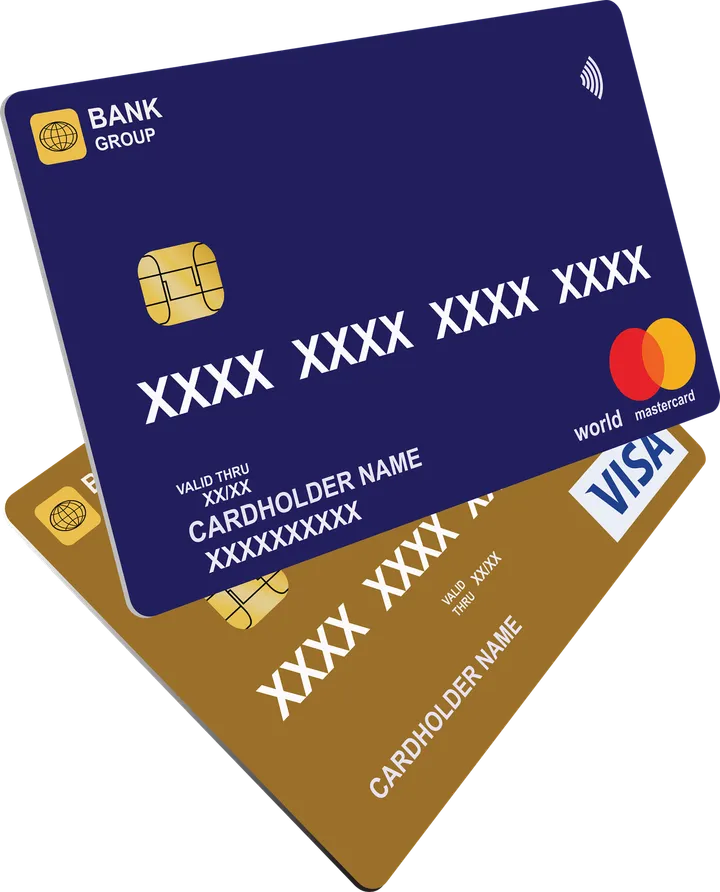
Buying crypto with a card in Albania is simpler than many people think: a Visa or Mastercard from your bank, a verified account on a platform that accepts Albania, and a few minutes. What makes it tricky is the detail: the card’s currency, the 3-D Secure check, your bank’s filters and fees that don’t show up straight away on screen.
This page is only about bank cards. If you are weighing a card against SEPA, P2P or cash, see the quickest way to buy crypto. If what you want is a crypto card for spending, that is a different topic: crypto cards in Albania.
01How buying crypto with a card works
There are two models. In the first, the platform processes the card payment itself: you enter the amount, pick the card, approve it in your banking app and the coins appear in your account. CEX.IO and Kraken work like this. In the second, the exchange hands you over to an outside partner, an “on-ramp” provider, that takes the payment and delivers the coins. That is how card purchases work at Binance, Bybit, OKX, Bitget, KuCoin and Gate.
The second model isn’t bad, but it adds a party, its own terms and often a second verification. For a first purchase, the fewer steps, the fewer places to get stuck. There is also a third model: services such as Paybis or MoonPay that sell you crypto by card and send it straight to your own wallet, with no exchange account.
02Lek card or euro card: where the money leaks
Most Albanians hold a lek debit card linked to their salary account. When you pay €100 to an exchange with it, the bank converts lek into euro at its selling rate and often adds an international transaction fee. Together that can add 1–3% on top of the platform’s fee.
The simplest fix is a euro account with a linked card. Many Albanian banks offer euro accounts and cards, since slightly more than half of bank deposits in the country are held in euro. If you have one, use it for crypto purchases and choose euro as the payment currency on the platform. If you only have a lek card, choose euro rather than dollars so you go through a single conversion.
Watch out for dynamic currency conversion (DCC) too. Some checkout pages or partners offer to charge you “in your own currency” at their rate. It looks convenient, but the rate is usually worse. Decline it and pay in the platform’s currency, leaving the conversion to your bank.
03Debit card or credit card?
Technically both work. In practice a debit card is the better choice for crypto. With debit you spend money you have; with credit you risk buying a very volatile asset with borrowed money, and some card issuers treat crypto purchases as cash advances, with a fee and interest from day one. Check your card’s terms before you try.
Prepaid and virtual cards are a special case: some platforms refuse them, especially when the name on the card doesn’t match the account name. The general rule applies everywhere: the card must be in your name, the same name as on your ID.
043-D Secure: the check that protects you
3-D Secure (Visa Secure, Mastercard Identity Check) is the step where your bank asks you to confirm the payment is yours: in the banking app, by SMS code or both. Most crypto platforms require it for every card payment, or at least for the first.
Many failures start here. The phone number your bank has is out of date, the app isn’t installed, or the confirmation times out while you hunt for the code. Before your first purchase, make sure the banking app works on your phone and your number is current. And a safety rule: never give your 3-D Secure code to anyone who calls you, even if they say they are from the bank or an “exchange”.
05Why payments get declined, and what to do
We found no Albanian bank with a public policy banning card payments to crypto exchanges, nor any Bank of Albania circular on the subject. Declines still happen. The Bank of Albania has warned the public about the risks of virtual currencies since 2017, and banks’ automated systems are cautious with first international payments to platforms of this kind.
- The card isn’t enabled for online or foreign payments. At some banks this is switched on separately in the app or at a branch.
- Fraud filter. The first payment to a foreign crypto merchant gets blocked automatically. Call the bank, confirm it is you, and try again.
- Daily limit. Your bank caps online card payments; you can often raise it temporarily.
- Name or address mismatch. Details on the platform must match the card and your ID.
- Platform limit. New accounts have caps; an amount above them is refused by the platform, not the bank.
06What a card purchase really costs
The cost of a card purchase has three parts: the platform’s card fee, the spread (the gap between the price you are quoted and the market price) and your bank’s conversion if the card isn’t in the platform’s currency. The bars below show only the first part, as published by the platforms or secondary sources.
A concrete example: you buy €100 of bitcoin with a lek card. If the platform fee works out at 3% and the bank’s conversion at 2%, the coins you receive are worth about €95. With a euro card, about €97. The same amount by SEPA transfer and an order on the book can cost under €3 in total, but takes a day and requires the platform to offer SEPA to your account.
On limits: at CEX.IO, new accounts are capped at $1,000 a day and $3,000 a month for the first three months after verification, with a $20 minimum card purchase. For large amounts a card is the wrong tool; see crypto OTC for large sums.
07Which platforms accept cards from Albania
None of the platforms below excludes Albania, according to their own lists or secondary sources. None is licensed by the AMF, because as of October 2026 the AMF has licensed no platform. The full ranking is on the best crypto exchanges.
| Platform | How you pay | Card fee | Official site |
|---|---|---|---|
| CEX.IO | Direct | 0.49–4.99% + service | cex.io |
| Kraken | Direct | Instant Buy: spread + ≈1.5% | kraken.com |
| Paybis | Broker, to your wallet | ≈4.5% + network | paybis.com |
| Binance / Bybit / OKX | Via partners | Set by the partner | binance.com · bybit.com |
| Coinbase | Access unverified | ≈1.5–4% all-in | coinbase.com |
At OKX, Bitget, KuCoin and Gate card purchases also go through partners. In wallets such as Trust Wallet or MetaMask, card purchases run through providers like MoonPay.
08Apple Pay and Google Pay: when they work
CEX.IO, Paybis and many other providers accept Apple Pay and Google Pay at the same fees as a card. At CEX.IO the amount per transaction is $20–$1,000. But it only works if your Albanian bank lets you add the card to Apple Pay or Google Pay. We have not verified which banks do; check in your phone’s Wallet app whether your card can be added.
If it can, the advantage is speed: you confirm with Face ID or a fingerprint, and a separate 3-D Secure code is often not needed. If it can’t, you lose nothing: use the card directly.
09Step by step: your first card purchase
- Prepare the cardEnable online and international payments in your banking app, check the daily limit and make sure your phone number is correct for 3-D Secure.
- Open an account and verifyChoose a platform that doesn’t exclude Albania, register under your real name and upload your ID card or passport with a selfie.
- Add the cardIn the payments section, add your card. Some platforms make a small test charge or ask for a separate confirmation.
- Choose currency and amountPay in euro if your card is in euro, and in euro even with a lek card. Start small and check the total before confirming.
- Confirm with 3-D SecureApprove the payment in your banking app or with the SMS code. Within minutes the coins appear in your account.
- Secure and documentSwitch on app-based 2FA, keep the purchase receipt and, for larger amounts, move the coins to a wallet you control.
10After you buy: safety, chargebacks and tax
Once the coins are delivered, a crypto card purchase is in practice irreversible. Fraudsters know this: a common script is to ask you to “buy by card” and send the coins to them, for an “investment” or to “unlock” a profit. No legitimate business asks you to do that. In April 2026 Albanian and Austrian authorities, supported by Eurojust, shut down Tirana call centres behind more than €50 million in fraud.
Don’t forget tax either: since 1 January 2024, under Law 29/2023, individuals’ gains from crypto-assets are taxed at 15% and self-declared by 31 March. Keep your card purchase receipts, because you need the purchase price to work out the gain. More on crypto tax in Albania.
Frequently asked questions
Can I buy crypto with a card from Albania?
Yes. Visa and Mastercard cards from Albanian banks are accepted by most international platforms, either in-house (such as CEX.IO and Kraken) or through partners (such as Binance, Bybit and OKX). You need a verified account and a card enabled for international online payments.
Why does my bank decline payments to a crypto exchange?
The usual causes are automatic fraud filters on a first international payment, a card not enabled for online purchases abroad, a daily limit or a failed 3-D Secure check. We found no Albanian bank with a public ban on paying exchanges; a call to the bank usually solves it.
How much does it cost to buy bitcoin with a card?
At CEX.IO the card fee is 0.49–4.99% plus a service charge; at services like Paybis about 4.5%. If your card is in lek, your bank adds a conversion into euro or dollars, often 1–3%. For repeat purchases, a SEPA euro transfer plus spot trading works out far cheaper.
Is a lek card or a euro card better for buying crypto?
A euro card is usually cheaper, because no major exchange accepts lek and a lek card goes through your bank’s conversion. If you only have a lek card, pay in euro and decline any offer on the checkout page to charge you “in your own currency”.
Sources
- CEX.IO — Payment methods and fees (buy bitcoin) · checked 2 Oct 2026
- CEX.IO — Fee schedule and new-account limits · checked 2 Oct 2026
- CEX.IO — Unsupported countries list · checked 2 Oct 2026
- Bank of Albania — On the risks of using virtual currency · 13 Jul 2017
- Onramper — Card on-ramp coverage for Albania · checked Oct 2026
Ready for your first coin?
Sign-up and the ID check take a few minutes. Then you can buy Bitcoin, Ether or USDT with your Visa or Mastercard.
No crypto platform is licensed by Albania’s AMF yet — this one included.